
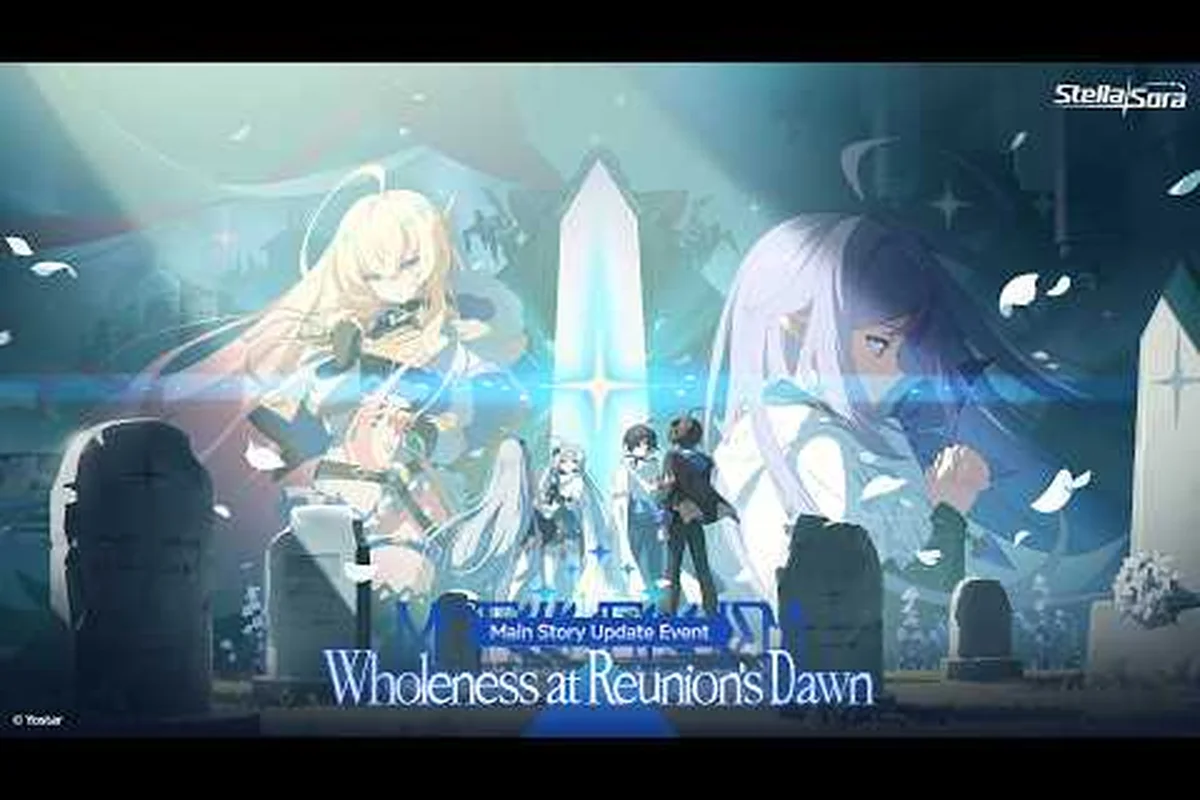
Stella Sora's story is built on choices that ripple, and Stella Sora alternate endings are the payoff for players who explore every branch the world of Nova has to offer. The official Steam page explicitly states that every decision has consequences and that a choice can change the ending of the world, which means finishing the main story once is only the beginning. This guide covers what the ending system actually is, how branching story choices work, where the minigame layer feeds into conclusion flags, and how the housing-style Tyrant's Tower Beta mode ties personal scenes to global story outcomes. If you want to keep your roster prepped while chasing every conclusion, our Stella Sora resource farming guide breaks down which materials to stockpile before locking in the branching outcomes the ending system, story choices, minigame-derived flags, and Tyrant's Tower Beta personal scenes all feed into.
What Branching Choices in Stella Sora Actually Do
The official Stella Sora store page splits the experience into six headline pillars, and two of them — Branching Story Choices and Heartlink System — are the structural backbone of every alternate ending. Branching Story Choices says plainly that "a gentle encounter or casual interaction can trigger a chain of events," and warns that small actions can snowball into different world states. Heartlink layers on top of that by letting you chat, give gifts, and unlock private side stories as affinity with each Trekker grows.
In practical terms, an ending flag is the result of three signals stacked together: a story-stage choice at a named decision point (like the one inside Wholeness at Reunion's Dawn), a Heartlink affinity band that quietly confirms or contradicts that pick through private scenes, and a small activity flag from minigame scores or housing events that can flip the flag's polarity when the season rolls over. Because the game does not publish a full branch map, players who want to lock in a specific alternate ending need to treat those three signals as a single dependency chain — pick the branch, grind the right Trekker's affinity into the matching band, and clear the relevant seasonal activity before the roll-over so the activity flag does not cancel the choice.
-
Story-stage choices at the named decision points in the main chapter (Wholeness at Reunion's Dawn is the current anniversary chapter, released in parts).
-
Heartlink affinity with one or more named Trekkers, which unlocks private scenes that can confirm or contradict a story-stage choice.
-
Activity flags from minigames and housing-style events, which grant bonus scenes or shift a flag's polarity at the season roll-over.
The game does not publish a public flowchart of every branch, so the safest way to think about endings is as a matrix of stage choice × affinity band × activity flag. The official 1st Anniversary news post (stellasora.global/news/4958) confirms that the main story gains a special anniversary chapter and that past event routes are permanently added to a Story Recap gallery, which is how players revisit prior story routes without replaying the whole chapter.
How Consequence Flags Propagate
Every named decision point in Nova is binary at the moment you click, but the downstream flag is a weighted sum. The anniversary chapter synopsis itself is the cleanest example: the Tyrant awakens from a sorrowful dream, finds familiar companions no longer at their side, and the story asks why the Tyrant arrived alone and where the partners went. That setup is not flavor — it is a flag that future choices read against.
When you pick a Heartlink partner for the relevant window, that partner's affinity tier (unlocked through daily chat, gifting, and event scenes) determines which private scene plays at the chapter's resolution. If your affinity band is low, the partner's scene is absent and the story resolves with a default "solitary" flag. If your affinity band is high, the partner's scene either confirms a hopeful flag or complicates it. The official sources do not publish the exact affinity numbers required, so treat the community-reported thresholds as a guide rather than a guarantee.
Why "Alternate" Does Not Mean "Secret"
The word alternate is doing real work here — it is not a synonym for hidden. Alternate endings in this game are simply the off-ramps from the main story's golden path. They are accessible to any player who makes different choices at the named points, raises Heartlink with a different Trekker, or engages with the seasonal events that hand out story flags. There is no hidden trigger that requires a specific Runic Disc, and there is no paywalled conclusion locked behind a gacha roll.
Reading the Main Story's Decision Points
The main story is delivered as discrete chapters, with the 1st Anniversary chapter Wholeness at Reunion's Dawn currently split across multiple parts. Part two of that chapter arrived on Oct. 29, 2026 (UTC-7) per the official news post, and the in-game notice is always the final word on rollout timing. Each chapter has a small number of named decision points, and each point has a clean binary prompt rather than a multi-axis alignment chart.
A useful frame for reading these prompts is to treat each named decision point like a checklist item rather than a vibe choice: identify which of the three outcomes it routes toward (Heartlink partner lock-in, faction alignment, or neutral path), and whether the option consumes a story token, key item, or a unique Heartlink scene. Because the in-game notice does not label these consequences upfront, a quick mental pass through those two questions before you click — typically a Heartlink scene with Astra, Kati, or another named partner is the irreversible pick — lets you avoid softlocking a route you actually wanted to see later.
-
Does this option lock in a Heartlink partner, a faction alignment, or a neutral path? Most named points resolve to one of those three.
-
Does this option burn a one-time-only resource (a story token, a key item, or a Heartlink scene)? If yes, the choice is usually irreversible for that chapter.
Because the official sources do not publish a public branch map, the practical workflow most players settle on is to save before a named point, take the branch they want to see first, then replay the chapter for the alternate. The Story Recap gallery added in the anniversary update means you do not have to re-fight any combat to revisit a prior route — only the choice-and-cutscene layer needs replaying.
Anniversary Chapter Flags and What They Affect
Wholeness at Reunion's Dawn is structured around a single load-bearing question: why did the Tyrant arrive without his second-in-command at the Dawn Bell? That question is the chapter's central flag, and the narrative refuses to resolve it directly — instead, three discrete choice points force the player to commit to an interpretation before the resolution scene reads the accumulated flag value. Each prompt is phrased around the missing companion (the "echo" dialogue option, the pursuit action, and the final stance on loss), so every choice is really a vote on the Tyrant's motivation, and the flag binary collapses at the chapter-end reunion into either the hopeful or bittersweet ending branch.
| Decision Point | What You Choose | Flag Direction |
|---|---|---|
| Opening voice | Speak to the absent partner's echo | Opens Heartlink-gated scene |
| Mid-chapter action | Pursue the missing companion | Triggers solo or partnered resolution |
| Closing stance | Accept the loss or resist it | Locks the hopeful or the bittersweet flag |
These three are illustrative of the structure, not a verbatim transcript — the official sources do not publish the exact prompt text. The point is that each prompt nudges the same underlying flag in one of two directions, and the final flag is read at the chapter's resolution scene.
The Minigame Layer and How It Connects to Endings
The Version 2.0 announcement on stellasora.global/news/4963 lists the rotating casual mode set that drives the activity-flag layer. The relevant modes for ending flags are Chess Defense, Speed & Wheels, Fatebound Stellar Deck, Summit Show, and Tyrant's Tower Beta. Most of these carry an Authorization Level gate — level 5 and level 11 are the commonly seen thresholds — so players who skip the Authorization grind tend to lose access to the seasonal minigame content that feeds the bonus-scene pool.
| Mode | Flag Type Written | Currency / Reward Output | Authorization Level Gate | Bonus-Scene Effect at Chapter Resolution |
|---|---|---|---|---|
| Tyrant's Tower Beta | Camp-decoration & named-NPC visit flag (housing-style personal-scene flag) | Treasures collected inside the Monolith / campsite layout | Level 5 commonly seen | Feeds personal-scene flags through camp decorations and visiting NPCs |
| Chess Defense | High-tier clear flag | Defender's Medal, Stellanite Dust, Sprout Tickets | Level 5 commonly seen | Unlocks a story review scene at the season rollover |
| Speed & Wheels | Leaderboard placement flag | Stellanite Dust, Antique Bronze Coin | Level 11 commonly seen | Feeds a competitive-scene flag from leaderboard rank |
| Fatebound Stellar Deck | Card collection flag | Event-adjacent card rewards (not itemised in news/4963) | Level 11 commonly seen | Card collections at season end feed a narrative frame for the next chapter |
| Summit Show | Summit tier clear flag | Climb-event tier rewards (not itemised in news/4963) | Level 11 commonly seen | Reaching the named summit tier unlocks a closing-scene variant |
A practical reading of the minigame-to-ending pipeline looks like this: each of the five flagged modes (Tyrant's Tower Beta, Chess Defense, Speed & Wheels, Fatebound Stellar Deck, Summit Show) writes a discrete activity flag on the season's persistence layer, and the bonus-scene pool at chapter resolution checks which combination of those flags is present. Because the Authorization Level gate (levels 5 and 11) sits in front of most of these modes, a player who clears only one mode in a window typically sees the default ending rather than the variant tied to the missed flag pair — which is why community trackers recommend front-loading mode clears before the season rollover, since the threshold itself is not published on the official news post.
-
Tyrant's Tower Beta — the permanent customization mode where players arrange their Monolith and campsites, collect Treasures, and complete missions. This is the housing-style layer referenced in the keyword set, and it feeds personal-scene flags through the camp decorations and the named NPCs who visit the camp.
-
Chess Defense — a defense battle that pays Defender's Medal, Stellanite Dust, and Sprout Tickets. High-tier clears unlock a story review scene at the season rollover.
-
Speed & Wheels — a race format where Sparkla pushes past the speed limit, paying Stellanite Dust and Antique Bronze Coin. Leaderboard placement feeds a competitive-scene flag.
-
Fatebound Stellar Deck — the event-adjacent card mode. Card collections at season end feed a narrative frame for the next chapter.
-
Summit Show — the climb event. Reaching the named summit tier unlocks a closing-scene variant.
The community-reported pattern is that two or three of these mode-flags need to fire in the same season window for a bonus scene to play at the chapter's resolution. The official sources do not publish the exact threshold, so the safe play is to clear at least one of each mode pair before the season rolls.
Tyrant's Tower Beta as the Housing Anchor
The keyword "stella sora housing guide" maps to Tyrant's Tower Beta, which is the only officially named customization mode where players arrange a personal space. It is not a furniture shop layered over the main story — it is a permanent Monolith-adjacent mode that pays out Treasure-based rewards, mission progress, and personal-scene flags. The community reads it as the housing layer because it is the only place in the game where you arrange named NPCs around a shared space, and the placement choices feed which private scene plays at the chapter's resolution.
Because Tyrant's Tower Beta is a permanent mode with no announced end date, it is also the most reliable place to grind ending flags without worrying about season rollover. The Treasure set you collect in the tower is a long-tail resource, and the named missions in the tower layer onto the main story's flag set rather than running in parallel.
A Practical Walkthrough to Route Every Ending
A clean route plan looks less like a checklist and more like a layered schedule, because the three flag sources (story, Heartlink, activity) all advance on different timers. The five-step loop below is the workflow most players converge on once they have cleared the anniversary chapter once.
| Step | Action | What It Advances |
|---|---|---|
| 1 | Clear the current chapter on a save file | Establishes the base flag |
| 2 | Raise Heartlink with at least two named partners | Unlocks partner-gated scenes |
| 3 | Run each rotating minigame once per season window | Fires the activity-flag layer |
| 4 | Decorate Tyrant's Tower Beta and invite named NPCs | Sets the housing-scene flag |
| 5 | Replay the chapter and choose the alternate option | Locks the alternate conclusion |
The order matters less than the coverage. Players who clear the chapter on one save and then replay with a different partner typically see the partner-gated variation of the same base flag, not a wholly new branch. To see a structurally different alternate ending, the most reliable method reported by the community is to swap two flag sources at once — a different Heartlink partner plus a different activity-flag set — rather than a single choice swap.
Heartlink Investment Per Route
Heartlink is the layer that costs the most time per route, because raising a named partner to a flag-relevant affinity band is a multi-day loop of chat, gifts, and event scenes. The pattern that works for most players is to identify the partner the chapter is reading against, then concentrate daily Heartlink on that partner while the chapter is still active. Once the chapter rolls to its conclusion, the partner's affinity band at that moment is what the flag reads, and any affinity raised after the chapter is locked in does not retroactively change the conclusion.
If you want to see multiple partner-gated variations in a single live window, the practical move is to raise two partners in parallel and accept that each will sit at a mid-band affinity rather than maxing one. Mid-band affinity is enough to fire the partner-scene flag, even if it does not unlock the partner's full private scene set.
Minigame Coverage and Season Windows
The minigame layer runs on a season window, and the activity-flag pool resets at the rollover. That means a minigame flag you fire in the current season does not carry forward into the next chapter unless that chapter reads against the same season. Players who want to maximize their ending coverage for a given chapter should:
-
Clear each rotating minigame at least once during the chapter's live window.
-
Reach the named summit or leaderboard tier in the modes that gate it.
-
Spend the Defender's Medal and Stellanite Dust payouts before the season rolls, because unspent payouts do not carry forward as a flag — only the participation does.
The Tyrant's Tower Beta loop is the exception. It is a permanent mode, so its flag layer is the only one that is reliably long-tail. Decorations and named NPC visits in the tower are the closest thing the game has to a persistent housing flag.
Common Pitfalls When Chasing Alternate Endings
The most common mistake players make when chasing Stella Sora alternate endings is treating the choice as a single-click decision, when in practice the choice is the final layer of a three-source flag stack. Players who click the alternate option without raising the relevant Heartlink partner or firing the activity flag tend to see the same base conclusion with a slightly different cutscene, not a structurally different ending.
The second most common pitfall is ignoring the Authorization Level gate on the rotating minigames. Players who sit below the level 5 or level 11 thresholds cannot access the seasonal minigame content, and their activity-flag layer stays empty for the entire window. The Authorization grind itself is straightforward, but it is gated behind the main story's early chapters, so new players who jump into ending-hunting before they have hit the Authorization milestones tend to find the activity layer locked.
The third pitfall is trying to backfill flags after the chapter has rolled. Heartlink affinity, minigame participation, and Tyrant's Tower Beta state are all read at the chapter's resolution, not retroactively. Players who finish a chapter and then go back to grind the minigames will see the activity flags fire for the next chapter, not the one they just finished.
A Note on Save Files and Replay
The anniversary update's Story Recap gallery means you can revisit prior story routes without re-fighting the combat, but it does not let you re-spend a choice. To see a structurally different alternate ending for a chapter that has already rolled, you need to start a fresh replay of the chapter and reach the named decision point again. The recap gallery is for review, not for retroactive branching.
Advanced Tips for Hardcore Route Hunters
Players who have cleared every public route and are looking for the remaining edge-case variations tend to focus on three areas: the seasonal event window, the Heartlink partner pair, and the Tyrant's Tower Beta decoration set. The seasonal event window is where the most volatile flags fire, because the event shop and the named event missions feed a separate flag pool that the main story does not always telegraph.
The Heartlink partner pair matters because some chapters read against a named duo rather than a single partner. Players who raise only one partner to a flag-relevant band will see the partner-gated scene for that partner, but they will miss the duo-gated variation. The community-reported pattern is that the duo flag fires when both partners in the named pair are at a flag-relevant affinity band during the same window.
The Tyrant's Tower Beta decoration set is the slow-burn flag. Players who have been running the tower since the mode's release tend to have a longer personal-scene pool than players who started the tower late, because the named NPC visits in the tower read against the camp's decoration history rather than its current state. A camp that has been decorated for two seasons will fire more personal scenes at a chapter's resolution than a freshly decorated one, even if both reach the same decoration milestone.
Where the Official Sources Stop and Community Data Begins
The official channels — the stellasora.global news hub, the official YouTube channel, and the Steam store page — publish the structural facts: that branching exists, that consequences propagate, that casual interactions can snowball, and that Heartlink layers on top. They do not publish a public branch map, exact affinity thresholds, or a flag-resolution table. Players who want to see every variation treat the official sources as the rulebook and community reports as the playbook, and they validate every community tip against a fresh save file before committing to it. This is also why a long-form YouTube walkthrough like My Experience Playing Stella Sora 1 Year Later by Yuyu is useful: it captures the anniversary-cycle playthrough in real time, which the patch notes never do.
Frequently Asked Questions
Does the game publish a full branch map for every alternate ending?
No. The official sources confirm that branching exists and that consequences propagate, but they do not publish a public flowchart of every decision point, every Heartlink partner pair, or every activity-flag threshold. Players who want to map the routes themselves typically work from a clean save file and validate each branch against the Story Recap gallery.
What is the fastest way to raise Heartlink for an ending-relevant partner?
Daily chat, daily gifting, and any event scene that features the partner. Mid-band affinity is enough to fire the partner-scene flag at the chapter's resolution, so most players stop grinding once they hit the band rather than pushing for max affinity. The official sources do not publish the exact band number, so community reports are the working reference.
How does Tyrant's Tower Beta connect to the main story's flags?
The tower is the only permanent customization mode, and its decoration history plus the named NPCs who visit the camp feed a personal-scene flag that the main story reads at the chapter's resolution. Long-running camps tend to fire more personal scenes than freshly decorated ones, because the flag reads the camp's history rather than its current state.
Can I see every alternate ending on a single save file?
Practically, no. The choice layer is one-time per chapter on a given save, and the Heartlink and activity-flag layers advance on different timers. Players who want to see every variation typically run two or three parallel save files through the chapter and vary the Heartlink partner and the minigame participation on each.
What happens to ending flags when a season rolls over?
The minigame and event-shop flags reset at the season rollover, but the main story's base flag and the Tyrant's Tower Beta flag persist. Players who want to carry the activity flag into the next chapter need to fire it during the chapter's live window — it does not retroactively apply to a chapter that has already resolved.